Unknown's avatar

When “things” come together

I love it when things come together.  Whether it’s watching a good suspenseful movie or reading a great mystery and finally getting all the pieces of the plot in place, I love it when it comes together.

I love it when plans come together.   Starting a morning with my coffee in hand and going through recipes, walking through my herb garden and rubbing my fingers through the herbs, smelling the fragrance left on my fingers, anticipating which ones I will use for the dishes I will cook.
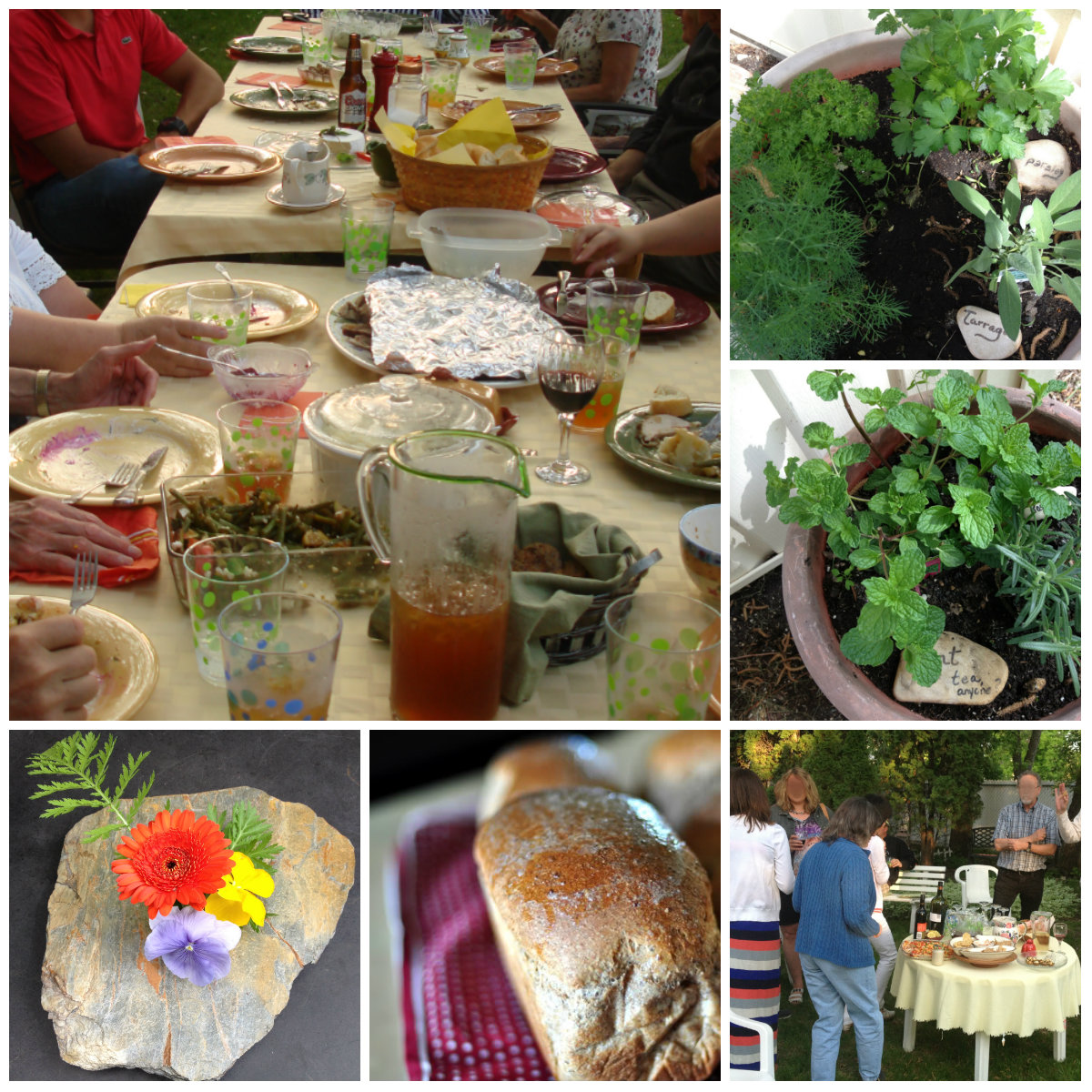
ImageI love the messiness of kneading the bread dough by hand,  and then smelling the bread as itbakes, and thinking about the hands that will break off pieces to dip into the variety of dishes knowing not everyone will choose the same ones.

I love setting the table and then cutting fresh flowers to grace the table.  I love it when there is laughter at the table and the clinking of glasses and cutlery as people enjoy the food and each other’s company and it all comes together.

I love the sound of voices, rising and falling as discussions become passionate and people share their hearts.  Sometimes it’s messy as the disagreement rises to the table.  I love knowing who’s voice will likely rise first because of how they express their passion, knowing who will need to be coaxed into the discussion and who may choose to share their thoughts the next day privately.

That’s the beauty of loving diversity, isn’t it?    The freedom to choose which foods we will eat, to express ourselves because we are accepted and appreciated, knowing effort will be made for each to understand and to be understood.  I love it when things come together.

Unknown's avatar

Mental Health in the Workplace Employer Fundamentals 101 © | Mental Health Works

This site provides some good information any manager should understand when dealing with workplace performance issues that may pertain to Mental Health issues.  Thank-you Canadian Mental Health Association, Ontario.


Mental Health in the Workplace Employer Fundamentals 101 © | Mental Health Works.

Unknown's avatar

Differences in Communication Styles and Values

A client recently asked me for advice with regards to assistance to understand a situation with a new employee from South AsiaBridgeWorksHR, intercultural communication.  The gentleman had recently been hired and was on probation.  In the first few weeks, he had stated that he would take a Monday off as vacation corresponding with a weekend he was going out of town on.  The vacation policy was explained to him and he was informed that he would be entitled to take vacation time after one year.  This clearly did not satisfy the employee and he stated that “he would be taking the day off  following that particular weekend.

While some employees may have feigned illness in order to take that time off and the employer would have been none the wiser, my client was perplexed at what was perceived as “defiance” or “arrogance”on the part of new employee who had yet to pass his probation.

Is there something my client is missing?

There very likely is.

First the direct style of speaking was something my Canadian client did not understand.  The request was not couched in the “appropriate” language of a request (“I have a … to attend on xxx weekend and will be unable to return to work until Tuesday.  I regret that this is occurring so early in my employment but the circumstances are such that I must attend to this.  Is this covered by our vacation plan?  No? Well I am hoping that you will understand that these were plans that were made before my employment and I am unable to change them and must attend…” ) and sounded more like “I dare you to try to stop me”.

The Canadian style of using softeners in our language take time to learn for someone from a culture that speaks more directly.

What if the request to take time off included the information that there was a wedding or a graduation to attend for a cousin on the spouse’s side.  Perhaps the employer is asking themselves, “Are you kidding me?  you’d risk your job for a cousin? your spouse’s cousin?  Really?”  The answer is likely, “Yes. Family relations come first.”

“Then you must not really want this job if you are willing to risk it over a wedding”.  Again the response may be, “But of course I want this job, I’ve worked terribly hard to get it, I’m so proud to have it.  I have accumulated so much debt in setting up our lives here and I need this job, but I can’t dishonour my grandparents by not being at this wedding.”

Can we relate to this kind of situation?  An important link to understanding this is to recognize differences in communication styles, attitudes towards disclosure and differences in values.  If you’d like to learn more or have us spend time with your team to address some of these situations, please contact us at solutions@bridgeworkshr.com or call 204 895 4667.

Unknown's avatar

A Pilgrim’s Plea by Denise Bissonnette

A Pilgrim’s Plea

Please don’t ask us to “reinvent” ourselves
for a changing world of work.
For we only wish to unfold,
to continue the miracle of being born.
To greet each day as the world does,
Fresh, new and ripe for living.

We long to lean towards the sun like flowers –
eager to blossom,
To move wild like waves under a silver moon-
drawn on the tide of our native longing.
We wish to belong to the world, yes.
But first and foremost, we wish to belong to ourselves.

For you cannot downsize, right size or minimize the human soul –
That place in each of us that is our true home
is totally immune to the corporate takeover,
to mergers and acquisitions,
because it’s not for sale.

Please don’t ask us to be so smitten with technology
that as we enter more deeply into the world of the virtual,
we surrender what has always come natural.

Let us not be hypnotized by the 21st century mantra “To accept change as the only constant in our lives”.
Can we not, instead, restore our faith in those things that never change?
Like the genius in the seed
to become a flower, a tree or a human being.
The faithful turning of the earth,
Or the lovely way that gravity
continues to hold us to her.

Can we not restore our faith
in the persistent beckoning of the human heart
To give and receive,
To love and be loved,
To fail with as much grace as we succeed?

As we become more firmly rooted in ourselves
may we cease to demand that the world navigate our work lives with promises of more programs,
more positions and more promotions.
May we have the maturity to see that
those in the oval office,
those in the board room,
those on the trading floor
are not prophets…
they, too, are pilgrims,
their every step remaining as much a mystery as our own.

For each of us must travel the uncharted seas of our lives, alone, yet, blessedly, together, side by side.
Trusting that inner compass of hope and courage and imagination.
Never forgetting that when you bring heart to the journey, you make it holy.
When you bring heart to the journey,
you will not lose sight of the brilliant stars in the immense night sky.

This the pilgrim’s plea at the onset of the 21st century.
To bring all that we are and all that we have
To the joy and the sorrow
The wonder and the terror
The known and the unknown
of daily living. 

But, please, don’t ask us to reinvent ourselves
for yet another change in the world of work,
For we only wish to unfold,
to continue the miracle of having been born.

©Denise Bissonnette, 2000